
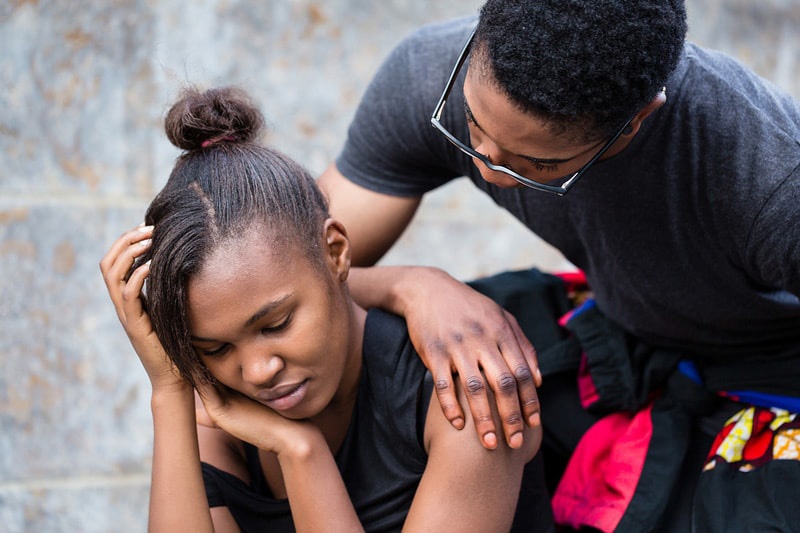
Communication for couples can be hard -- it doesn't matter if you're dating or married. And most couples have a common pattern to their fights. Recognizing this pattern when it's occurring and then interrupting it are two crucial steps to end the arguing in your relationship.
Part of what makes communication skills for couples so complicated is that for the initial portion of the relationship most couples don’t recognize that those skills are necessary. At the beginning of a relationship there is a high level of attentiveness on the part of each partner as they try to please and impress each other. Communication seems so easy because each person is working hard to make things work. But as the relationship progresses and life gets busier these efforts lessen and communication can become more challenging.

Communication Patterns When Couples Fight
Lisa Diamond, associate professor at the University of Utah has been studying how couples fight. Her research has helped her discover some valuable lessons about how small gestures and minor reconsiderations of what's really happening between you and your partner can really help diffuse big arguments and help you gain better communication skills.
Here's an excerpt from the article How to Diffuse a Fight. See if you can see either yourself or your partner in how this couple fights:

"The source of conflict that Tim chose," the researcher is telling them, "is 'You treat me like you're my mom.'" At this, Stacey, an elegant 30-year-old operations manager for a nonprofit in Salt Lake City, stiffens. Tim, her tall, lean 29-year-old photographer boyfriend, smiles awkwardly, abashed. With his slouchy T-shirt, clunky black glasses, and floppy hair, he's a study in nerdy chic. He looks at the floor. "Tim, you should explain what you mean by this particular conflict," the researcher continues, "and then both of you try to resolve it. You'll have four minutes."
"Um-" Tim says, by way of starting.
"What do you mean by that?" Stacey cuts in.
And they're off.
"The classic pattern you see is the demand-withdrawal dynamic," Diamond whispers, referring to a pattern in which the woman makes demands and the man, in response, shuts down. It turns out that each behavior has striking corollaries within the body. "The man usually finds it calming to withdraw from the conflict," Diamond says. His heart rate drops. His breathing slows. Yet, as he pulls away, "the woman watches in growing frustration. She's thinking, 'Why won't he talk to me?'" Her heart rate rises. Her breathing becomes shallow and short. "The more he withdraws, the more physiologically aroused she becomes."
If you're the demanding partner in this dynamic, your best response at this point is surprisingly simple: Listen to your heart, literally. Monitor your physiology. If your heart is racing, your breathing ragged, your eyes ablaze, step back and take a deep breath. Close your eyes. Calm down. This small action can be surprisingly consequential, even profound. "The body is so fundamentally involved in our relationships," Diamond says. "But few of us pay attention to it."

Your own body's cues aren't the only ones worth paying attention to, however. The most important small gesture you can make toward your partner is to empathize. Consider that the very behavior making you nuts - his mumbling and emotional retreat - is calming for him, Diamond says. "It's quite possible that he can't respond in any other way. Our conflict styles develop over a lifetime." So don't raise your voice and demand that he continue engaging in that persistent fight about money or housework or friendships or sex (topics that recur constantly in Diamond's work). Let him withdraw.
Then, when you're calmer, go after him with a smile. "Humor is very important in defusing tension," Diamond says.
Skills To Develop To Improve Communication During A Fight
Diffusing a fight as it’s happening can be very difficult. Emotions are running high and often you’re more concerned about getting your point across than hearing what your partner has to say. Unfortunately, this is what typically causes things to escalate and become even harder to resolve.
Improving your communication skills, especially during a fight, requires practice and deliberate effort. It can be done though, and with time it won’t feel nearly as awkward. Take a look at the tips below for ideas on how to get started.
Give this a try: Practice these 3 strategies to begin to interrupt your fighting.
- Listen to Your Body
- Empathize
- Use Humor
These are not the only ways for couples to diffuse a fight and create better communication, but they are a good start. The most important thing to remember is that you and your partner are ultimately on the same side – the one that wants a happy relationship. That means that no matter what the issue is you need to treat each other with respect and work together toward a resolution.
Couples must practice communications skills regularly so they are ready when conflict arises.
Do you agree that this is how couples typically fight? Share your thoughts in a comment below.
Editor's Note: This post was originally published February 06, 2010 and has been updated with new information for accuracy and comprehensiveness.
Looking for More? Check Out These Articles
- Not Able To Communicate Even Though We're Married
- My Husband Says It's Hard For Him To Communicate
- What To Look For In Men Suffering From Depression
- Get More Help with Communication


4 Comments
Click here to read/write comments